08.05.2026
Archiquad x TAQU
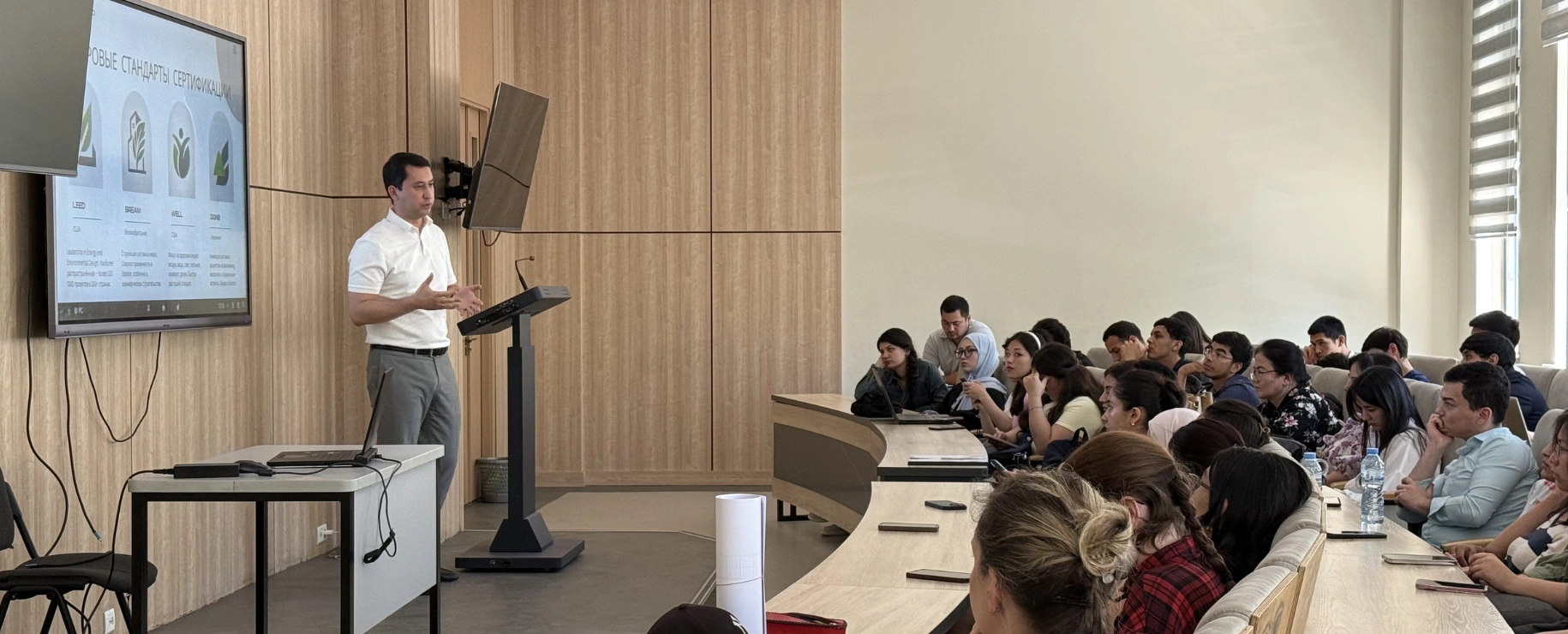
At Tashkent University of Architecture and Civil Engineering, a meeting dedicated to green architecture and its role in the future of cities was held. The founders of Archiquad and alumni of the university, Alisher Shaabdiev and Bakhrom Khodjaev, addressed students and faculty members, sharing their experience in implementing sustainable design principles and environmentally friendly technologies in architecture and urban planning.
During his presentation, Bakhrom Khodjaev provided a detailed overview of the key principles of green architecture. For many students, the information was new and highly engaging. The lecture explored how and why energy efficiency is achieved in buildings through proper orientation, high-quality thermal insulation, thermal mass utilization, natural ventilation, and solar panels managed by intelligent systems. Water conservation is ensured through rainwater harvesting, greywater reuse, and closed-loop hydrological systems. Eco-friendly materials, such as CLT structural timber, significantly reduce carbon emissions. Biophilic design integrates nature into architecture through vertical landscaping, green roofs, and indoor parks. The life cycle of buildings is considered from construction to demolition, making sustainability a well-planned and long-lasting strategy.

Excerpt from Bahrom Khodjaev’s lecture presentation
The co-founder emphasized that sustainable design is no longer a trend but a necessity. Buildings consume up to forty percent of the world's energy and generate more than one-third of global carbon emissions, while demand for certified sustainable buildings is growing three times faster than for conventional construction.
Alisher Shaabdiev presented several Archiquad projects. By utilizing modern technologies, the company helps reduce indoor temperatures and lower energy consumption. In projects such as BC Simurg, BC Concord, and BC Terminal, façade louvers were implemented to diffuse sunlight and reduce overheating, along with ventilated façade systems compliant with Uzbekistan’s building standards. These solutions provide natural ventilation and reduce the load on cooling systems. For the Terminal Business Center, rooftop solar panels were additionally designed to partially cover the building’s energy needs.
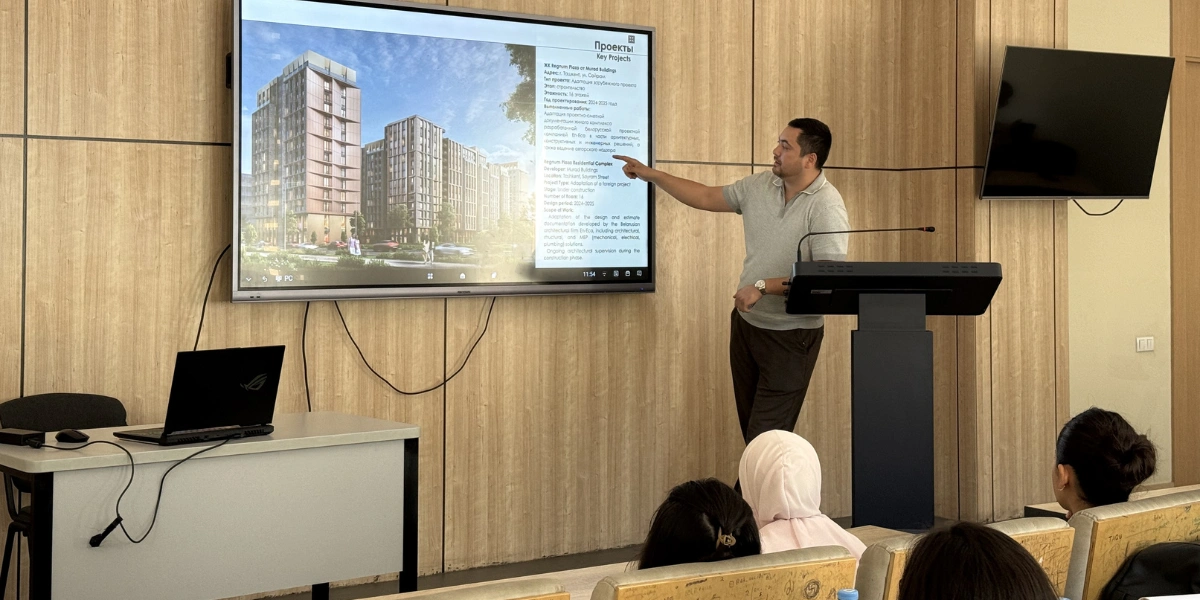
Photo: Archiquad Team
To demonstrate the scale and significance of green architecture, the speakers highlighted several world-class examples. In London, The Gherkin skyscraper achieves approximately fifty percent energy savings thanks to its unique shape and natural ventilation systems. In Singapore, Marina One received both LEED Platinum and Green Mark Platinum certifications, combining solar shading systems, efficient glazing, and water recycling technologies. In Doha, the Msheireb Downtown project became the world’s largest sustainable community, where more than one hundred buildings consume one-third less energy, while Lusail Plaza Towers utilize innovative shading fins that reduce energy consumption by thirty-five percent. In New York, the iconic Empire State Building reduced its energy consumption by more than forty percent following renovation and earned the rare distinction of holding both LEED Gold and Platinum certifications.
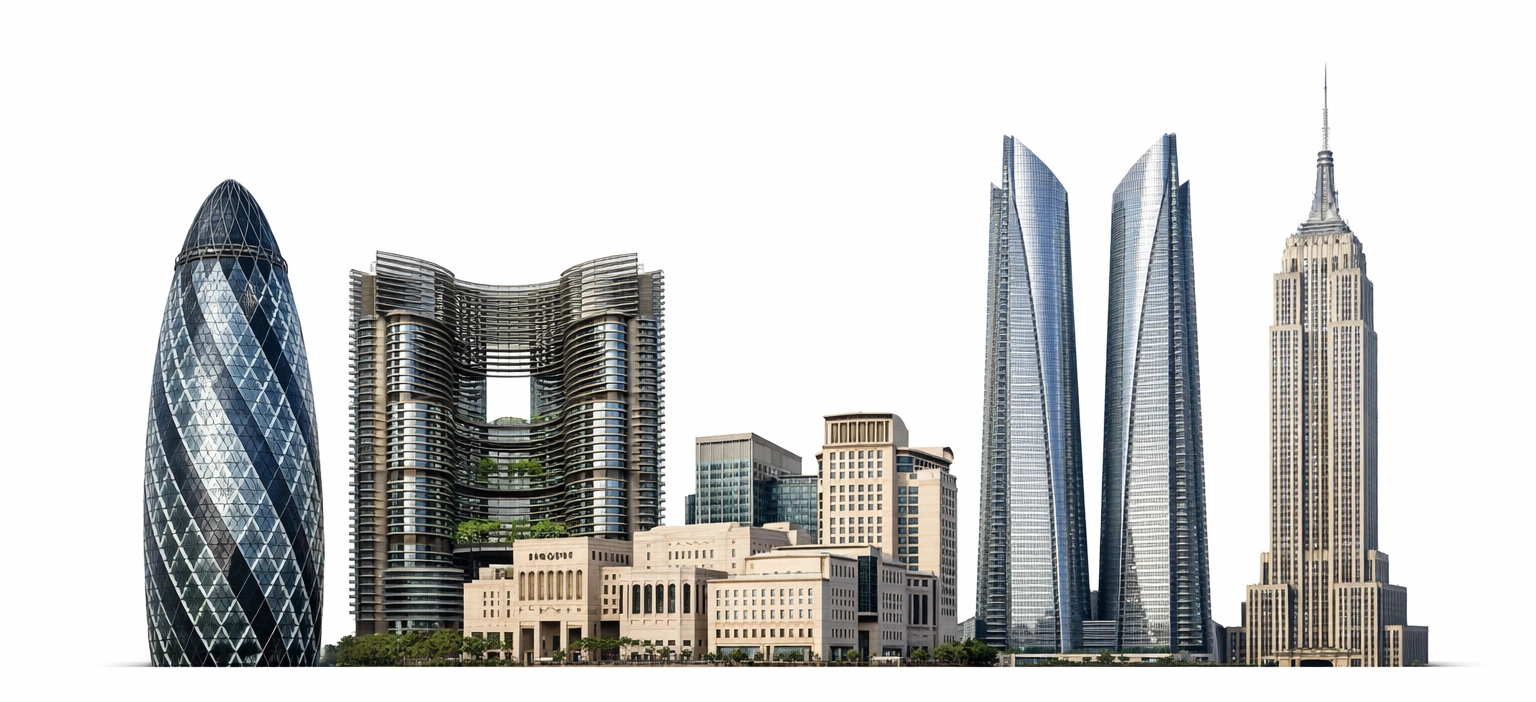
AI-generated illustration
A separate section of the lecture was dedicated to global certification standards. LEED in the United States, BREEAM in the United Kingdom, WELL with its focus on human health and well-being, and DGNB in Germany all establish high benchmarks for sustainable construction and serve as key references for architects worldwide.
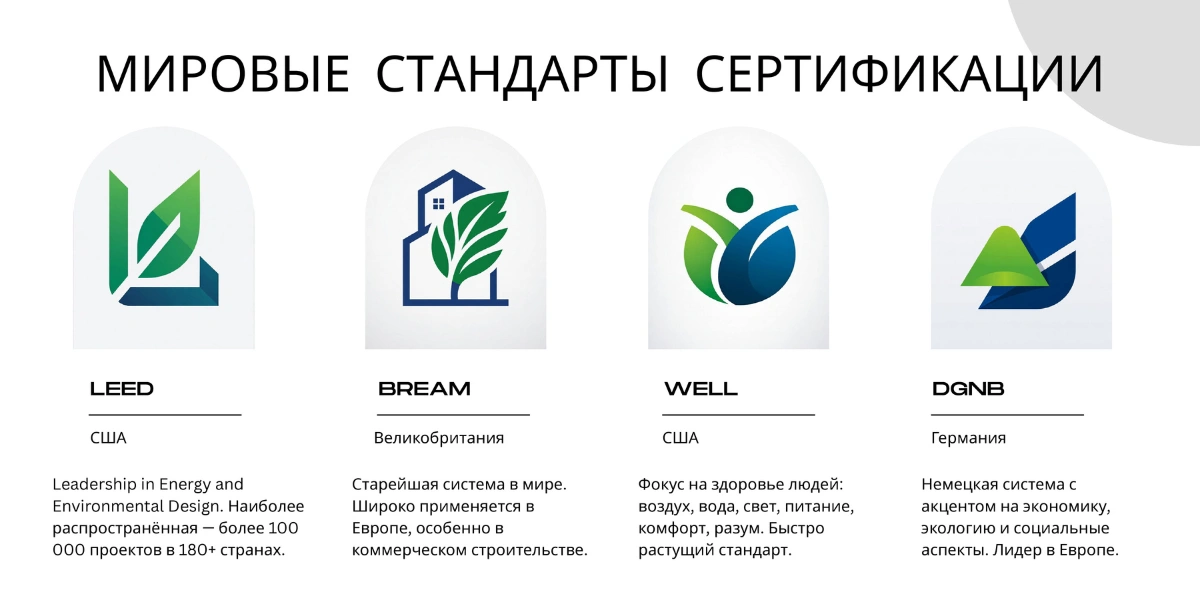
Excerpt from Bahrom Khodjaev’s lecture presentation
An equally important aspect discussed was the economics of green construction. The market is growing annually by seven and a half percent, operational costs can be reduced by thirty percent, rental rates increase by seven percent, and employee productivity rises by eleven percent. These indicators demonstrate that sustainable design is beneficial not only for the environment but also for business.
To conclude the meeting, the speakers compared traditional and sustainable approaches to architecture. The traditional approach assumes that form dictates function, aesthetics take precedence over ecology, projects end upon completion, and the client remains the primary stakeholder. The sustainable approach views nature as a co-author, combines performance with beauty, considers the building life cycle over fifty to one hundred years, recognizes the planet as an essential stakeholder, and operates within both local and global climate contexts.
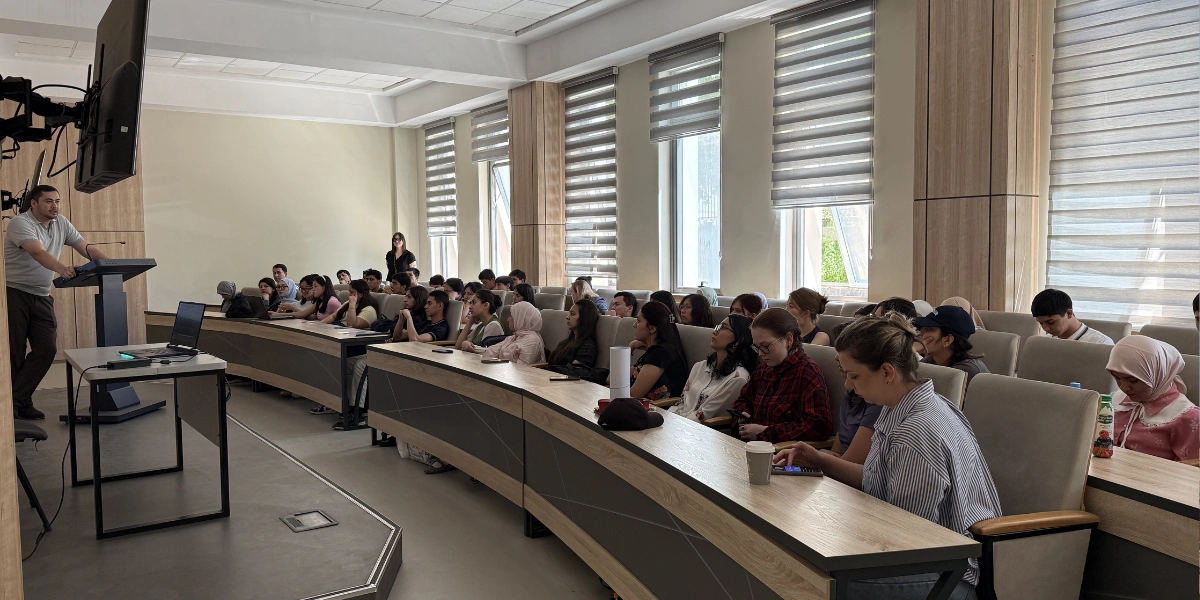
Photo: Archiquad Team
For students, the meeting provided an opportunity to see how global trends are reflected in local practice, while for Archiquad it became an important step in advancing dialogue about the future of cities and the role of architects in shaping sustainable environments. We express our gratitude to Tashkent University of Architecture and Civil Engineering for supporting initiatives aimed at advancing sustainable architecture in the country.